
Are Chemical Sunscreens REALLY Dangerous? Let’s Settle This!
Published: March 3, 2026
Author: Pentakare Labs Inc.
Hey ksunscreen fam 👋
If you’ve spent more than five minutes scrolling through skincare TikTok or reading wellness blogs, you’ve probably seen those scary headlines like:
“Chemical sunscreens are poisoning you” or “The toxic ingredient hiding in your SPF!”
While there’s a bunch of proven information on the dangers of UV rays, and how sunscreen can protect your skin against these harmful rays, we can’t blame you for any confusion when there’s so much conflicting information. 😅 One minute you’re trying to protect your skin, the next you’re spiraling down a rabbit hole of scary-sounding ingredients and wondering if your favorite SPF is secretly harming you.
So let’s grab a coffee (or tea if that’s more your thing), sit down, and actually look at what the science says about chemical sunscreens. No panic, no fear-mongering—just facts. And of course, full transparency.
What Even is a “Chemical” Sunscreen?
Super quick science lesson. I promise it’s painless!
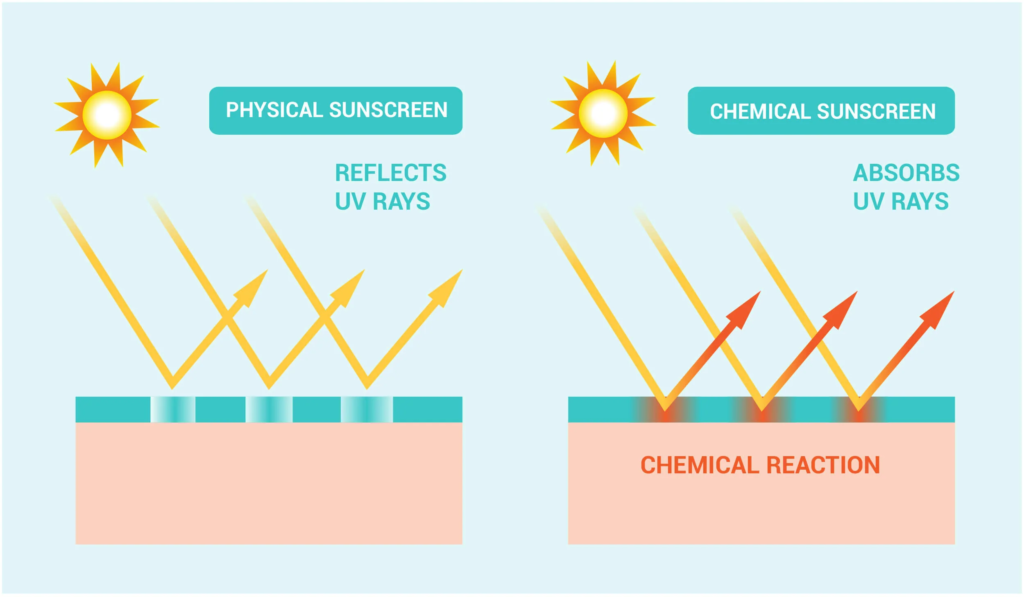
Think of chemical (A.K.A. organic) sunscreens like little sponges. They sit on your skin and absorb UV rays, then transform them into harmless heat that your skin releases. Physical (mineral) sunscreens, on the other hand, are like tiny mirrors—they sit on top and reflect UV rays away. Neither is inherently bad! They just work differently.
So… Are Chemical Filters Actually Dangerous?
This is where things get interesting. You’ve probably heard scary names like oxybenzone, octinoxate, avobenzone, and octocrylene thrown around. And yes, there are studies on these ingredients. But here’s what these studies are about…
Researchers discovered that some chemical filters can be absorbed through your skin into your bloodstream… BUT don’t panic!
Absorption does NOT equal danger.
It’s like when you drink orange juice, vitamin C enters your bloodstream. That doesn’t mean orange juice is toxic; it just means your body absorbed it.
Here’s a breakdown for the common chemical filters people worry about most:
| Ingredient | Claims commonly found online | What Science REALLY says |
| Oxybenzone | Messes with your hormones | This one DOES have some concerning studies. It’s the most controversial filter, and some research shows it might affect hormones at real-world exposure levels. This is why many experts suggest sensitive groups, such as pregnant people and kids, might want to avoid it. Luckily, there are many options that are oxybenzone-free! |
| Octinoxate | Endocrine disruptor | Lab studies show potential effects, but at levels WAY higher than you’d get from sunscreen. Human studies? Inconclusive. |
| Octocrylene | Toxic and harmful | Recent major reviews found NO evidence that it affects your hormones. Safe as used. |
| Avobenzone | Unstable and dangerous | Just a really good UVA filter! It can be unstable alone, but modern sunscreens fix this with stabilizers. |
There’s so much fear-mongering, but keep in mind that the amount of these filters that actually get into your body from normal sunscreen use is TINY.
Scientists calculate something called a “margin of safety”. It’s something like a safety cushion. For most chemical filters (except oxybenzone), that cushion is hundreds of times bigger than what’s considered safe. You’d literally have to bathe in sunscreen daily for years to reach levels that caused problems in lab studies. And even THEN, lab studies often use pure ingredients in ways that don’t reflect real life.
Filters That Changed the Game
This is where things get really exciting. And it’s also where Korea is absolutely showing off! You know how we talked about those controversial filters? Well, sunscreen science didn’t just stop there. Chemists developed newer, better, more stable filters that offer incredible protection with way fewer concerns.
The catch? You can’t get most of them in American or Canadian sunscreens… 😭
And that’s because the FDA hasn’t approved a new sunscreen filter since the 1990s . Meanwhile, Korea and Europe have been busy approving advanced filters that are:
- More photostable (they don’t break down in the sun)
- Broader spectrum (better UVA protection)
- Less likely to irritate the skin
- No controversy around them, unlike traditional chemical filters 😸
Check out these modern chemical filters (please don’t feel intimidated by their names!):
Tinosorb S (Bis-Ethylhexyloxyphenol Methoxyphenyl Triazine A.K.A. Bemotrizinol)
This filter is basically a legend in the sunscreen world. It’s broad-spectrum (protects against both UVA and UVB), incredibly photostable, and actually helps other filters work better and last longer. Studies show it’s safe for all skin types, with very low risk of irritation. It’s been used in Europe and Asia for over 20 years! And the best part, Tinosorb S is approved by Health Canada! Unfortunately, our American friends need to wait a little longer—Tinosorb S has yet to be approved by the FDA… BUT the FDA announced a proposal in 2025 to include Tinosorb S in US sunscreens. We might see them by late 2026!! 🥳
Tinosorb M (Methylene Bis-Benzotriazolyl Tetramethylbutylphenol)
Think of this as Tinosorb S’s equally awesome cousin. It’s a broad-spectrum filter that’s been approved in the EU since 2000. The cool thing? Studies show it has minimal absorption through the skin and a very low potential for allergic reactions. Safe, effective, and hardworking. Unfortunately, the North American market is waiting for Tinosorb M to be approved by Health Canada and the FDA.
Uvinul A Plus (Diethylamino Hydroxybenzoyl Hexyl Benzoate)
This one is a PURA UVA filter, and it’s fantastic at it. Made by BASF (a German chemical giant), it’s 100% photostable, meaning it doesn’t break down in sunlight as some older UVA filters can. It’s also been certified by EWG (Environmental Working Group) as safe, with no eye or skin irritation. Fancy name, amazing safety profile. Unfortunately, just like Tinosorb M, Uvinul A Plus isn’t yet approved by Health Canada and the FDA, so we can’t find sunscreens with this fantastic ingredient in North American stores… yet! 😉
Uvinul T 150 (Ethylhexyl Triazone)
This is one of the most powerful UVB filters out there. It’s incredibly efficient—you need very little of it to get high SPF protection. But just like the other filters above, Uvinul T 150 isn’t approved by Health Canada and the FDA. When will North America be able to catch up to Asia and Europe!? 😣
Wait… So Why Can’t We Get These in the US and Canada?
It’d be smart to ask this question, and it’s not because they’re unsafe. Actually, it’s the opposite—they have excellent safety records in Europe and Asia. The issue is regulatory gridlock.
In the US, sunscreen is classified as an over-the-counter drug, not a cosmetic. That means any new filter has to go through this massive, expensive approval process that can take over a decade and cost millions of dollars. The FDA hasn’t approved a new chemical filter since the 1990s!
In Korea, sunscreen is regulated as a “functional cosmetic”, which has a much faster approval process—about 4-6 months once data is submitted. This is why Korean brands can innovate so quickly and use these next-gen filters that make sunscreens feel lightweight, protect better, and cause fewer concerns.
Some exciting news: The FDA just announced a proposal to include Tinosorb S in US sunscreens. It could be available by late 2026!! FINALLY!!!! 🎉 But then, Korean and EUropean sunscreens are where it’s at if you want access to these advanced filters.
Our Recommendation: DEOPROCE Ultra Hydrating Sunscreen
Okay so after all that science talk, you’re probably wondering: “Alrighty, but what sunscreen should I actually buy, with all these strange ingredient restrictions?”
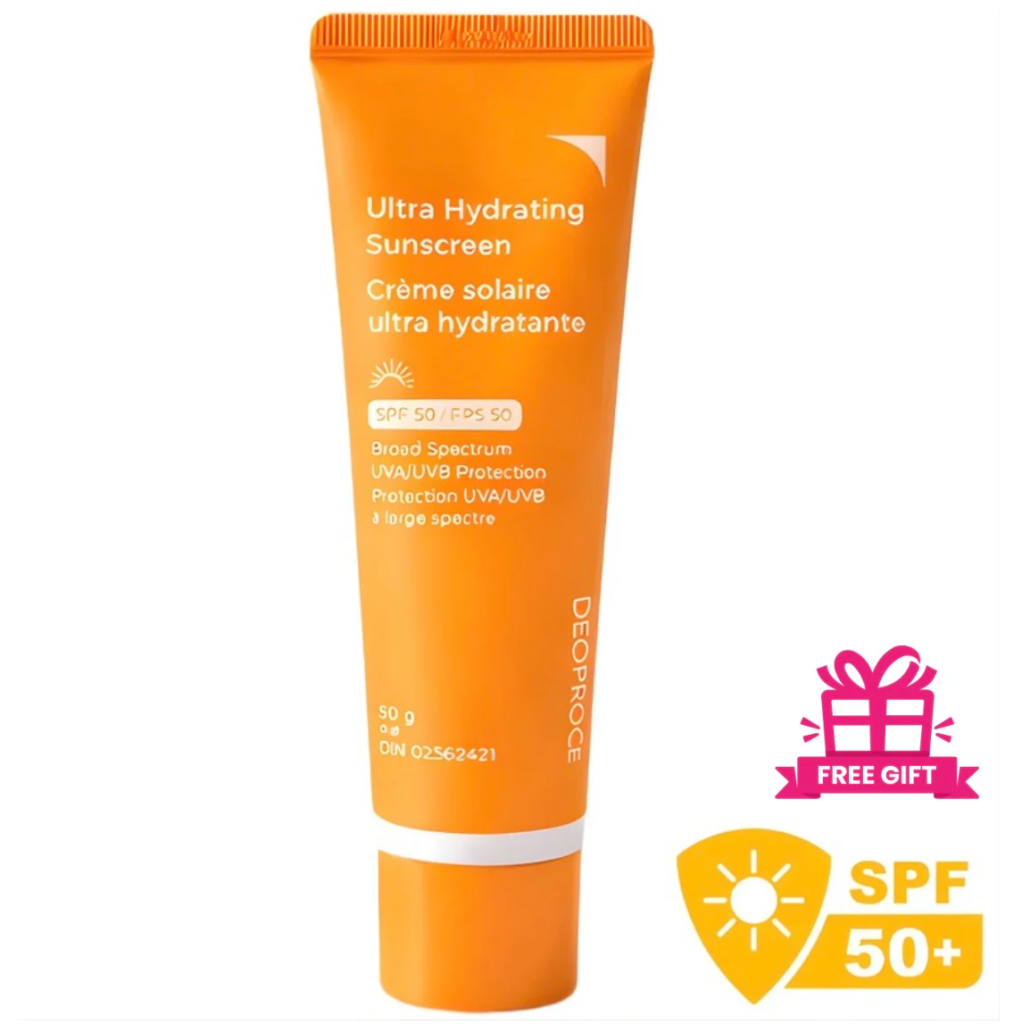
Well, let us introduce you to our latest SPF obsession: DEOPROCE Ultra Hydrating Sunscreen—a Korean sunscreen that checks ALL the boxes… and more that we haven’t even considered! Here’s why we love it 😆:
- Tinosorb S—It’s in here! This means you’re getting that advanced, photostable, broad-spectrum protection that’s literally years ahead of what’s available in most US sunscreens.
- No oxybenzone—Remember how oxybenzone is the one filter with genuine concerns? DEOPROCE left it out completely. No need to worry about your safety with this one! ☺️
- Smart blend of filters—DEOPROCE uses a mix of octocrylene, avobenzone, homosalate, ethylhexyl salicylate, and the superstar, Tinosorb S! Not only are these ingredients proven to be safe, but this blend will also provide rock-solid protection!! 💪☀️
- The watery texture—Feels lightweight, hydrating, and disappears into your skin like a dream. No white cast, no pilling under makeup, no greasy residue! Applying this sunscreen actually feels nice!!🪽☁️
- Packed with skincare goodies—Check out the table below for some sweet skin-loving ingredients included in DEOPROCE’s sunscreen!! It truly cares for your skin while protecting it! 💕
| Ingredient | What It Does For You |
| Niacinamide | Brightens, soothes, strengthens your skin barrier |
| Adenosine | Brightens, soothes, and strengthens your skin barrier |
| Ceramide NP | Keeps your skin barrier happy and hydrated |
| Sodium Hyaluronate | Plumps and hydrates your skin |
| Portulaca Oleracea Extract | Calms irritation, perfect for sensitive skin |
| Sea Water & Oliver Leaf Extract | Mineral-rich hydration boosters |
What’s the Expert’s Take on Sunscreen?
The FDA has actively asked sunscreen companies to provide more safety data on chemical filters. This is NOT a ban, it’s them being thorough, to ensure what’s going on your skin is safe. Despite the strict regulations, they recommend wearing sunscreen, as it is one of the safest, most important things you can do to protect your skin.
On the other hand, Health Canada has stated that absorption doesn’t equal risk, and the benefits of sunscreen VASTLY outweigh any theoretical risks.
And dermatologists everywhere unanimously agreed that the proven risk of skin cancer from sun exposure is WAY scarier than any unproven risk from sunscreen ingredients.
Wrapping Things Up…
If you’ve been scared away from chemical sunscreens by internet panic, we hope this helped clear things up. And if you’re ready to try a sunscreen that actually feels good to wear while giving you rock-solid protection, check out DEOPROCE Ultra Hydrating Sunscreen. (Or if you’re still hesitant to try chemical sunscreens, check out kbeauty.ca ‘s selection of mineral sunscreens 😉)
And trust us, your skin (with zero sun damage) will thank you. 😊 If you have any questions, don’t hesitate to contact us, we’d love to talk more about sunscreens with you!! ❤️
Thank you so much for reading all this! Stay protected, stay glowing 🥰